
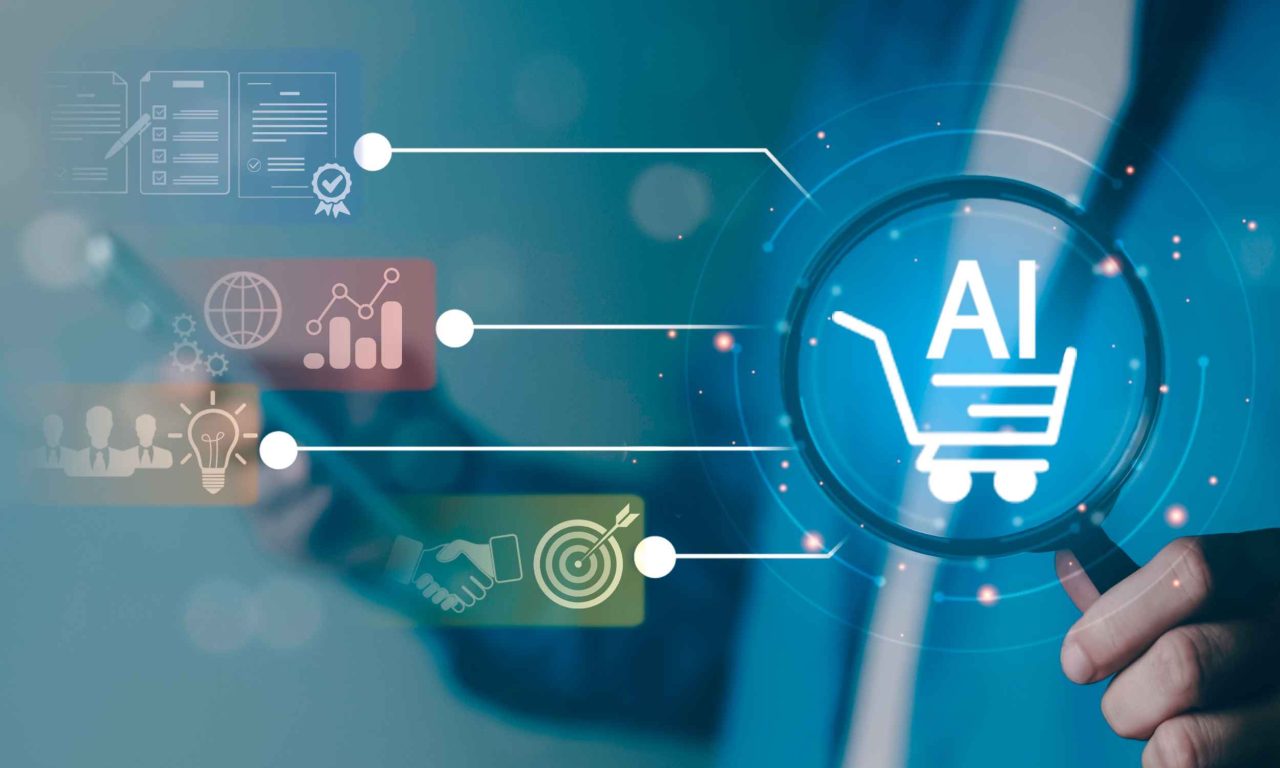
The marketing technology landscape is now undergoing its most profound structural realignment since the advent of the commercial web. The zero-click economy has brought in a major disruptive phenomenon where AI tools and answer engines bring users and prospective consumers a complete, almost tailor-made answers and information directly on the search page. Thus, it bypasses the need to visit a website. This trend causes a sharp drop in website traffic, making traditional or legacy metrices such as click-through rates obsolete. Also, it compels brands to focus on being cited rather than being clicked.
Consumers now prompt AI interfaces with natural-language questions (Who, What, When, Where, and Why), receive synthesised answers, compare options, and often complete purchases without ever visiting a brand’s website. If your brand isn’t appearing in these answers, you’re missing the conversation before it even begins.
This is the era of zero-click commerce, where visibility in AI summaries, social feeds, and Agentic platforms matters more than traditional web traffic.
The Great Decoupling
The zero-click phenomenon is driven by two distinct yet converging forces: Search Synthesis and Native In-Platform Commerce.
Behind this lies a radical evolution in search engines, a shift we refer to as ‘The Great Decoupling’. the B2B buyers no longer need to browse through blue links. Instead, they rely on AI engines like ChatGPT, Gemini, Perplexity, and Copilot to research their next purchase, which create shortlists, and sometimes even facilitate purchases natively without ever leaving the host app.
Social Commerce Platforms: TikTok Shop, Instagram Checkout, and YouTube Shopping capture impulse buying at the exact touchpoint of discovery.
Agentic AI & Native Checkouts: Next-generation AI agents integrated with digital payment backbones (such as OpenAI’s PayPal integration) allow autonomous assistants to complete purchase transactions directly inside the chat interface.
The AI engines deliver comparative insights, pricing, and recommendations without sending traffic to external sites, eliminating friction like pop-ups, cookie banners, and clunky navigation. This delivers a frictionless user experience that traditional search engines simply cannot replicate.
The Drop in Traffic
Data underscores the scale of the disruption. When an AI Overview is present, organic click-through rates (CTR) drop by nearly 40 per cent to 50 per cent.
According to recent data (Forbes, Mar 2026), nearly 60 per cent of Google searches in the US now end without a click to an external website. Other broader clickstream analytics indicate that overall, zero-click rates, including mobile queries, climb as high as 68 per cent to 77 per cent.
Pew Research found users click traditional results only 8 per cent of the time with an AI summary (versus 15 per cent without), and links inside summaries are clicked just 1 per cent of the time. Gartner projected a 25 per cent decline in traditional organic search volume by 2026 with some analyses suggest the shift is already more advanced in certain verticals. E-commerce brands have seen 18-35 per cent drops in organic traffic to product pages, as 40 per cent of shoppers increasingly start journeys with AI assistants.
The Economic Realities Behind Zero-Click
This decoupling fundamentally alters customer acquisition economics:
Customer Acquisition Cost (CAC) Inflation: Companies that historically relied on “free” organic SEO to maintain a sustainable, low-CAC acquisition funnel are seeing those channels evaporate. The residual website traffic consists largely of lower-intent, hyper-specific or pre-informed buyers, who have already completed preliminary research within AI summaries.
Low-cost organic funnels evaporate. Residual website traffic skews toward lower-intent or already-informed users. Marketers shift to paid channels, where CAC can jump dramatically (e.g., from single digits to USD 150+ in competitive categories).
As organic traffic yields decline, brands shift to paid channels, where CAC can jump dramatically from single digit to USD 150 driven by competitive bidding on diminishing ad slots.
Brand Consideration Erosion: AI syntheses often recommend a handful of options, drawing from just 2-7 sources. If your brand is omitted, you lose impression, share and consideration entirely, edited out before buyers know you exist. Commoditised categories are especially vulnerable.
Valuation Compression: The financial impact of zero-click extends directly to corporate balance sheets and valuation multiples. Private equity firms and institutional acquirers are applying 15-20 per cent haircuts to EBITDA multiples for companies overly reliant on organic search traffic with low AI resilience, particularly in the USD 50M – 500M revenue range.
Data and Loyalty Challenges: In-platform purchases limit first-party data collection, brand storytelling, and long-term relationships. Products can become interchangeable “secondary suppliers” in algorithmic recommendations, eroding emotional affinity.
Not every brand is equally exposed. Vulnerabilities peak for those in commoditized markets, those relying on SEO/content moats without strong differentiation, and those lacking direct channels like email, apps, communities.
The Strategic Playbook
If your brand isn’t the underlying source data training those AI models, your competitors are winning deals before you even realise a prospect is looking. Securing your future pipeline is no longer about chasing raw traffic with the “referral” model of search replaced by an “extraction” model, where AI engines extract the value from B2B content and present it as its own.
Forward-thinking brands pivot from traffic obsession to multi-layered visibility and direct relationships:
1) Master Generative Engine Optimization (GEO) & AEO
Instead of optimising solely for search engine crawlers, brands must optimise for Large Language Models (LLMs).
- Front-load key expertise: Research indicates that over 40% of LLM citations originate from the first 30% of structured page content.
- Implement deep Schema.org markup: To participate in this ecosystem, brands must deploy granular schema markups (product-rich results, pricing feed APIs, inventory availability) so algorithms can pull and purchase inventory automatically.
- Provide clear, authoritative citations: AI models prioritise objective, data-backed insights over fluff-heavy marketing prose. Since AI models learn entity relationships by scanning authoritative text, ensure your brand is consistently mentioned alongside top industry competitors, relevant categories, and high-value keywords in published media. Also make sure your inventory, pricing, and specifications are seamlessly accessible to these systems.
2) Convert In-Platform & Adopt Zero-Click Distribution
Stop treating social posts or search profiles merely as “teaser trailers” designed to force a website visit.
- Deliver standalone value directly within LinkedIn feeds, short-form video formats (TikTok, Reels, YouTube Shorts), and carousel slides.
- Enable native checkout touchpoints across social shops and conversational apps to capitalise on immediate impulse intent.
3) Build Branded Demand & Direct Touchpoints
When users search specifically for your brand name (e.g. “BrandX mechanical keyboard” rather than “best mechanical keyboard”), zero-click engines cannot easily divert them. Focus budget on building memorable brand affinity, owned communities, newsletter subscriptions, and proprietary product experiences that bypass search intermediaries entirely. An email list or SMS text database is a direct line to your audience that Google can’t take away. Build and maintain proprietary email subscriber lists, SMS databases, direct communities, and value-driven tools to protect revenue and maintain direct link with your market.
The Bottom Line
Adaptation yields results. NerdWallet saw 20 per cent organic traffic declines yet achieved revenue growth through better monetisation, affiliate optimisation, and diversified channels. Brands cited in AI Overviews can gain 35 per cent more organic clicks and 91 per cent more paid clicks than non-cited peers. AI-referred traffic often converts at higher rates (up to 3-4 times in some studies) and with elevated average order values.
Zero-click does not mean zero opportunity. High-intent AI users arrive more purchase-ready, and native commerce expands its reach while compressing the funnel.